Ulaanbaatar: A City Built for 400,000?

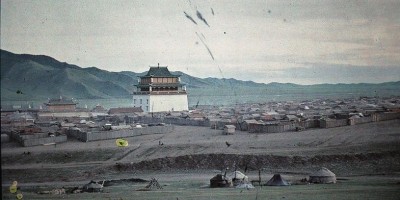
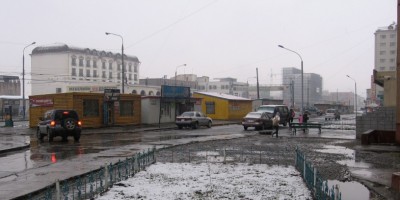
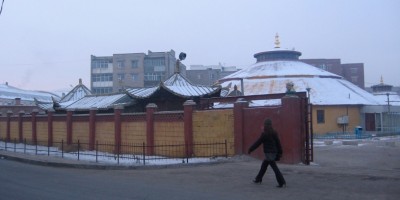
This morning I was reading an article which contained the following statement, "The Soviets engineered Ulaanbaatar for a population of 400,000. Now the city holds three times that number."1 I have seen variants of this statement in other articles over the last few months, and there is something about it that seems dubious. It has the feel of something that was first expressed informally as way of conceptualizing the extraordinary population growth and poor city management in Ulaanbaatar over the last few years, and then morphed into a "fact" in its subsequent retelling. Employing an apocryphal story of my own, I imagine there once was a group of professionals at Millie's Cafe discussing the deteriorating infrastructure and over-population of the city and someone chimed in with, "Just think, when the city was originally built it would have been for a population of 400,000 or so." To which everyone at the table nodded their heads knowingly, because that made perfect sense as an explanation for the world they perceived just outside the cafe's doors. Not too long after that one of the professionals at the table relayed this "fact" to a journalist doing a story on Mongolia. Yet, does comparing the city today with some alleged Soviet plan in the past make sense? I don't think so, and here's why.

Read more...

Baabar: 'The Absurd History of Legislators'

This week popular historian and former politician B. Batbayar (a.k.a. Baabar) published a rather scathing editorial entitled "The Absurd History of Legislators" directed at "resource nationalists" and the self-destructive attempts by parliament to appease them with legislation aimed at foreign investors. It struck me as a very compelling counter-balance to the usual inclination of international observers to view public opinion in Mongolia as being fantastically homogeneous and fully aligned against foreign investment. Mr. Baabar's opinion is only one, but it is an opinion read by many. He has more than 34,000 followers on Twitter, and the editorial had more than 84,000 views as of the writing of this post! It is worth a read. Here are a few choice passages I have translated from the original (see the footnotes and here) to give a flavor of his argument.

Read more...

The Mongol List: Playing Catch Up

There has been so much happening in Mongolia the last few weeks. Seriously. If you have been way too self-absorbed to pay attention, as I have, you have missed some interesting stuff. Last week, for example, Mongolia played host to the fourth meeting of the Community of Democracies, which began the day after I left Ulaanbaatar after nearly three weeks in the city. So, somehow I missed that, too. But, this is what the "Mongol List" is for, to catch us up on the interesting things that we may have missed.

Read more...

The Middle Layer

A decade ago when I was a Peace Corps Volunteer, I often heard from other ex-pats the startling fact that Mongolia was the highest recipient of development aid per capita in the world. It was usually stated with a hint of derision that implied, "Look around and tell me that money isn't being totally wasted here." I am not sure why that fact stuck with me, but it may have been because not too long after my Peace Corps service I was doing an unrelated research project that involved looking at per capita aid amounts. Naturally, given the many times I had heard the aid per capita fact about Mongolia, I expected to see it at the top of the list.

Read more...

The Bombshell that Fizzled

A week has passed since the revelations about Deputy Speaker S. Bayartsogt's offshore company and Swiss bank account were first reported by the International Consortium of Investigative Journalists (ICIJ). As mentioned in previous posts on this blog here and here, Mr. Bayartsogt neglected to claim the company and account on his official disclosure forms to the Independent Authority Against Corruption (IAAC) as required of all elected representatives and high-ranking officials in Mongolia. At this point he has only admitted to having violated those local regulations and codes of conduct. The more scandalous implication of the report is that it provides strong circumstantial evidence of a political leader abusing his official position for personal gain, and his public image as a proponent of the Oyu Tolgoi (OT) project also adds another layer of intrigue for conspiracy minded critics of the mine project. Given the popular perception that corruption is endemic among politicians and the accusations of wrongdoing routinely tossed around by critics of the OT project, this story had all the makings of a first rate political scandal. Yet, it appears to have fizzled for three reasons.

Read more...